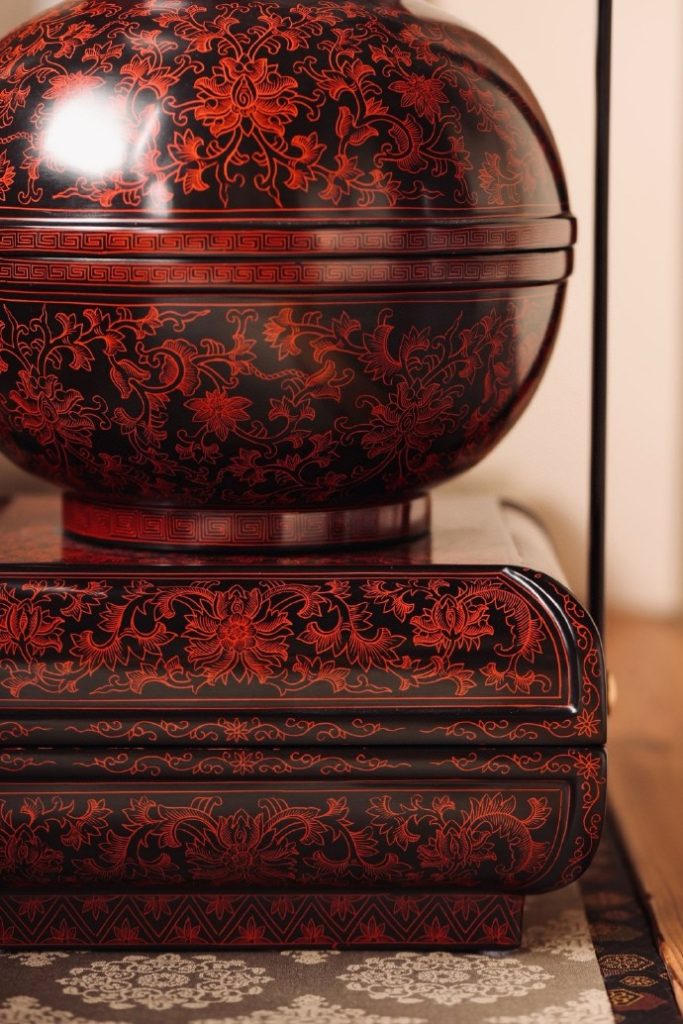
The Western Market’s Perception of “Lacquer Furniture” is Essentially that of “Oriental Art Furniture,” Not a Mass Consumer Product.
slaes strategy must be “Quality Over Quantity”—focus on high-net-worth individuals and avoid competition.
Core Audience (Volume-Driven but Difficult)
Here, “Mainstream” refers to the core purchasing power in the high-end furniture market, not the general public. Lacquer furniture cannot enter channels like IKEA, but can only target the “Oriental/Asian Style” segment of the luxury market.
Group Characteristics & Pain Points Lacquer Entry Point
High-End Homeowners (Ages 40–60) Owners of villas or large apartments; value materials and status; prefer “East-West fusion” or “Asian style.” Statement Piece: E.g., lacquer screens, entryway cabinets as a visual centerpiece.
Cultural & Intellectual Elites (Designer Circles) Lawyers, professors, architects, etc.; sensitive to craftsmanship narratives; long decision cycles. Craftsmanship Story: Emphasize “intangible cultural heritage” and “hand-layered techniques” to meet their pursuit of uniqueness.
Seasoned Collectors Focus on asset preservation and artistry; typically transact through galleries or auctions. Limited/Master Editions: Must carry clear artist signatures and lineage, not ordinary mass-produced items.
Opportunities
These segments are small yet have strong willingness to pay—key to absorbing lacquer’s high price point.
Oriental Aesthetics / Zen Spaces ◦ Audience: Yoga studios, meditation centers, high-end tea houses (serving overseas Asian communities or Oriental culture enthusiasts). ◦ Need: Tranquility. The warm, low-reflective gloss of lacquer is ideal for creating serene environments. Focus on tea tables, meditation chairs.
Luxury Hotels & Members-Only Clubs ◦ Audience: Five-star hotels (lobbies, suites), private membership clubs. ◦ Need: Art installations. They buy not “furniture” but “spatial artwork.” A lacquer dining table can instantly elevate a space’s cultural tone.
Luxury Crossover Buyers ◦ Audience: Fashion brands (e.g., Hermès, Chanel store interiors), high-end retail shops. ◦ Need: Rare materials. Lacquer is perceived as a natural material on par with exotic woods, suitable for window displays or VIP rooms.
Eco-Conscious & Slow-Living Advocates ◦ Audience: Upper-middle-class consumers in Northern Europe/Germany, highly concerned with material sustainability. ◦ Need: Natural lacquer (Urushi). Emphasize that lacquer is a plant-based resin (not chemical paint) complying with strict EU eco-standards. This group is willing to pay 40%+ premiums.
Actionable Advice from a east Perspective
Repositioning: In promotion, avoid the term “Furniture”; use “Lacquer Art” or “Collectible Design” instead. This automatically filters out price-sensitive clients.
Channel Strategy: Do not attempt to enter mainstream Western furniture retail. Your main battlegrounds are: ◦ Design Weeks (Milan, Paris): Connect with top designers. ◦ Galleries/Art Agencies: Consignment as artwork. ◦ High-End Boutique Hotels/Hotel Groups: Directly approach procurement for “spatial customization” solutions.
Tariff Countermeasures: Given high U.S. tariffs, prioritize the EU (Germany, France) and Middle East (Dubai) markets. If the U.S. is essential, classify products as “Artworks/Handicrafts” to leverage tariff code differences and mitigate risks.
In a nutshell: In the West, lacquer furniture has no “mass market.” Your clients are the select few who treat their homes as curated museums and are willing to pay for the story.